Object Encryption
- You can encrypt objects in S3 buckets using one of 4 methods
- Server-Side Encryption (SSE)
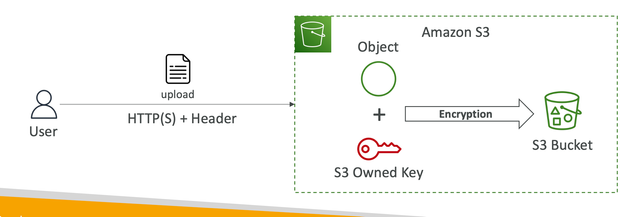
- Server-Side Encryption with Amazon S3-Managed Keys (SSE-S3) – Enabled byDefault
- Encrypts S3 objects using keys handled, managed, and owned by AWS
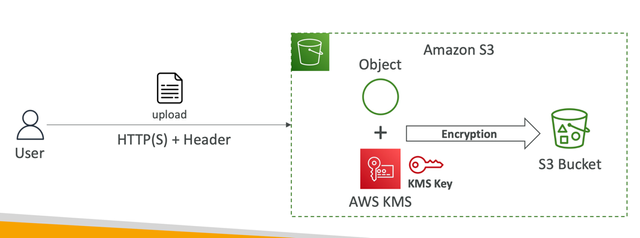
- Server-Side Encryption with KMS Keys stored in AWS KMS (SSE-KMS)
- Leverage AWS Key Management Service (AWS KMS) to manage encryption keys
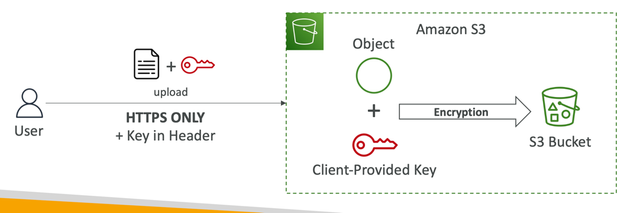
- Server-Side Encryption with Customer-Provided Keys (SSE-C)
- When you want to manage your own encryption keys
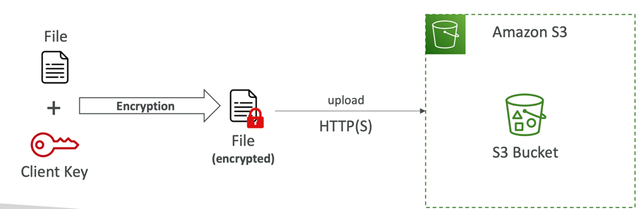
- Client-Side Encryption
- It’s important to understand which ones are for which situation for the exam
SSE-S3
- Encryption using keys handled, managed, and owned by AWS
- Object is encrypted server-side
- Encryption type is AES-256
- Must set header "x-amz-server-side-encryption": "AES256"
- Enabled by default for new buckets & new objects
SSE-KMS
- Encryption using keys handled and managed by AWS KMS (Key Management Service)
- KMS advantages: user control + audit key usage using CloudTrail
- Object is encrypted server side
- Must set header "x-amz-server-side-encryption": "aws:kms"
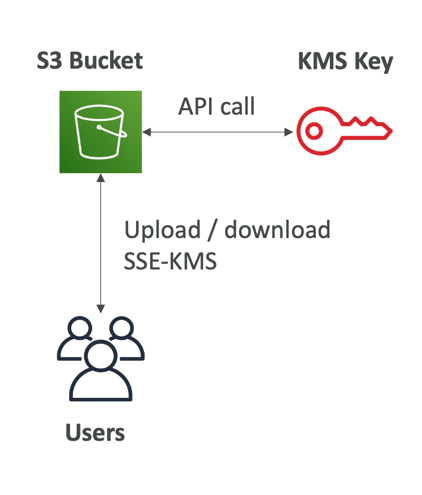
SSE-KMS Limitation
- If you use SSE-KMS, you may be impacted by the KMS limits.
- When you upload, it calls the GenerateDataKey KMS API.
- When you download, it calls the Decrypt KMS API.
- Counts toward the KMS quota per second (5500, 10000, 30000 req/s based on region).
- You can request a quota increase using the Service Quotas Console.
SSE-C
- Server-Side Encryption using keys fully managed by the customer outside of AWS
- Amazon S3 does NOT store the encryption key you provide
- HTTPS must be used
- Encryption key must provided in HTTP headers, for every HTTP request made
Client-Side Encryption
- Use client libraries such as Amazon S3 Client-Side Encryption Library
- Clients must encrypt data themselves before sending to Amazon S3
- Clients must decrypt data themselves when retrieving from Amazon S3
- Customer fully manages the keys and encryption cycle
Encryption in Transit(SSL/TLS)
- Encryption in flight is also called SSL/TLS
- Amazon S3 exposes two endpoints:
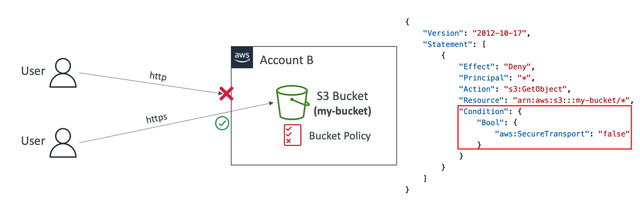
- HTTP Endpoint – non encrypted
- HTTPS Endpoint – encryption in flight
- HTTPS is recommended
- HTTPS is mandatory for SSE-C
- Most clients would use the HTTPS endpoint by default
Force Encryption in Transit aws:SecureTransport
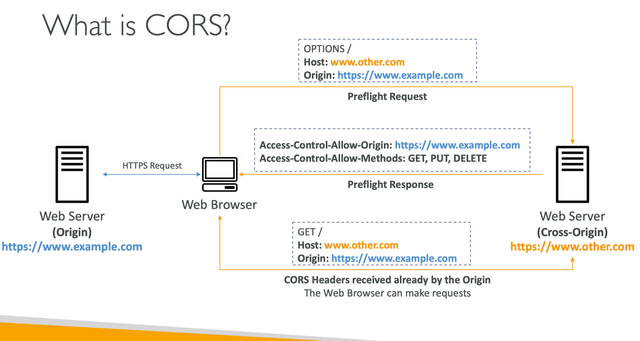
What is CORS (Cross-Origin Resource Sharing)?
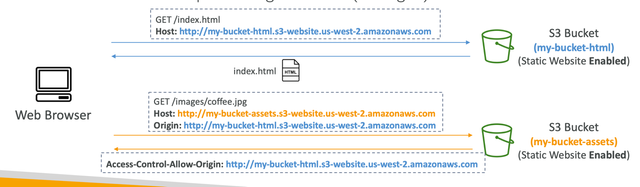
- If a client makes a cross-origin request on our S3 bucket, we need to enable the correct CORS headers
- It’s a popular exam question
- You can allow for a specific origin or for * (all origins)