EKS (Elastic Kubernetes Service)
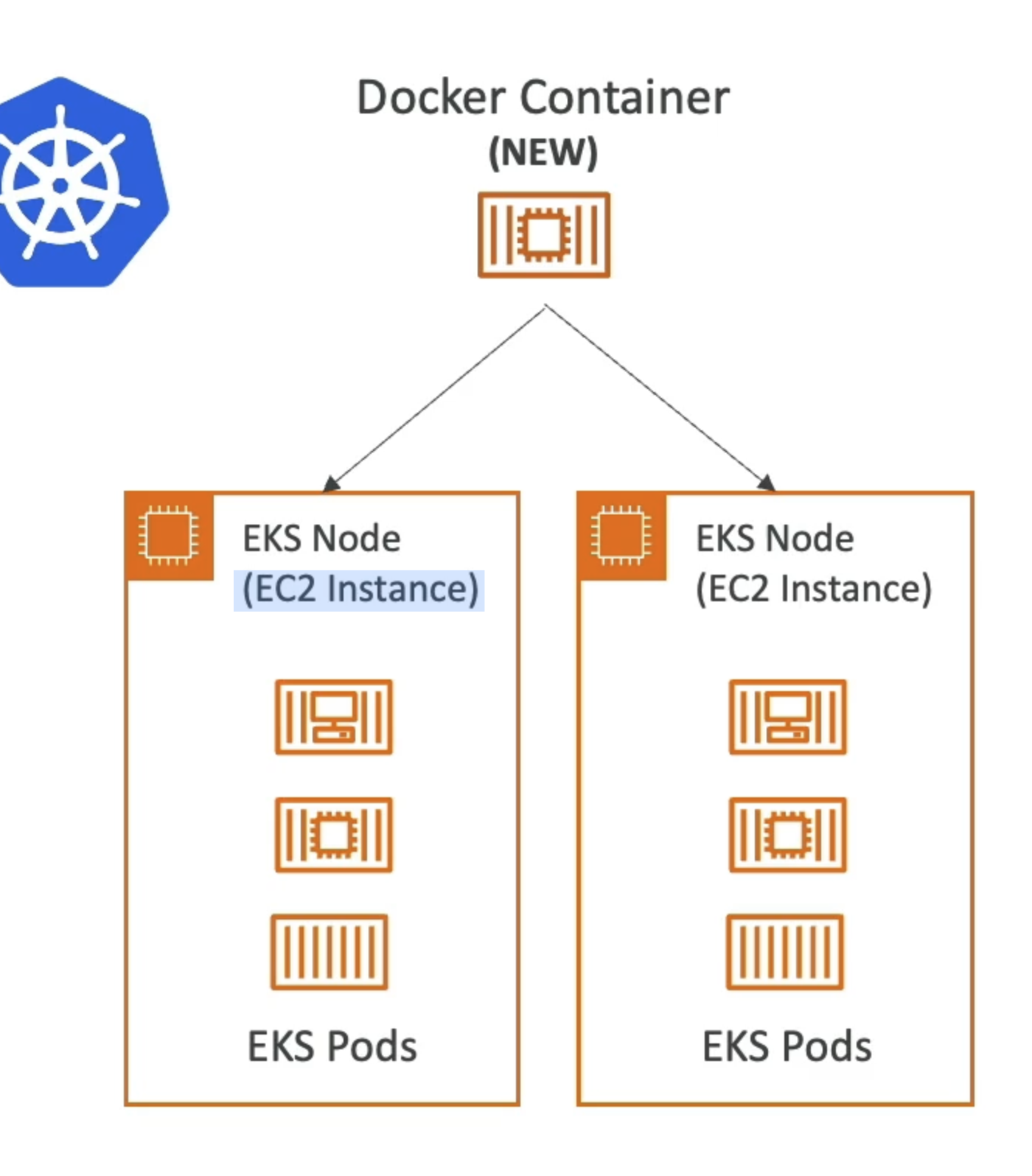
- Amazon EKS = Amazon Elastic Kubernetes Service
- It is a way to launch managed Kubernetes clusters on AWS
- Kubernetes is an open-source system for automatic deployment, scaling and management of containerized (usually Docker) application
- It’s an alternative to ECS, similar goal but different API
- EKS supports EC2 if you want to deploy worker nodes or Fargate to deploy serverless containers
- Use case: if your company is already using Kubernetes on-premises or in another cloud, and wants to migrate to AWS using Kubernetes
- Kubernetes is cloud-agnostic (can be used in any cloud – Azure, GCP…)
- For multiple regions, deploy one EKS cluster per region
- Collect logs and metrics using CloudWatch Container Insights
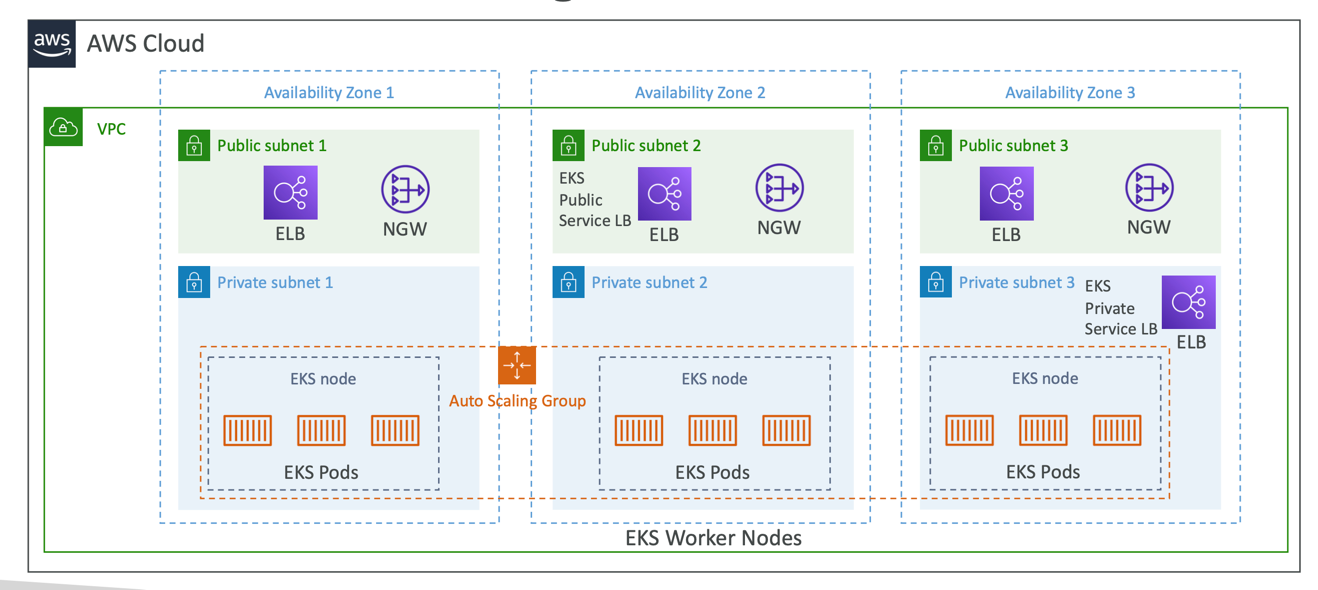
EKS Diagram
Node Types
- Managed Node Groups
- Creates and manages Nodes (EC2 instances) for you
- Nodes are part of an ASG managed by EKS
- Supports On-Demand or Spot Instances
- Self-Managed Nodes
- Nodes created by you and registered to the EKS cluster and managed by an ASG
- You can use prebuilt AMI - Amazon EKS Optimized AMI
- Supports On-Demand or Spot Instances
- AWS Fargate
- No maintenance required; no nodes managed
Data Volumes
- Need to specify StorageClass manifest on your EKS cluster
- Leverages a Container Storage Interface (CSI) compliant driver
- Support for…
- Amazon EBS
- Amazon EFS (works with Fargate)
- Amazon FSx for Lustre
- Amazon FSx for NetApp ONTAP