Well Architecture Framework General Guide Principles
Stop guessing your capacity needs
Test systems at production scale
Automate to make architectural experimentation easier
Allow for evolutionary architectures
Design based on changing requirements
Drive architectures using data
Improve through game days
Simulate applications for flash sale days
Cloud Best Practices - Design Principles
Scalability: vertical & horizontal
Disposable Resources: servers should be disposable & easily configured
Automation: Serverless, Infrastructure as a Service, Auto Scaling...
Loose Coupling:
Monolith are applications that do more and more over time, become bigger
Break it down into smaller, loosely coupled components
A change or a failure in one component should not cascade to other components
Services, not Servers:
Don't use just EC2
Use managed services, databases, serverless, etc !
AWS Well-Architected Framework 6 Pillars
Operational Excellence
Includes the ability to run and monitor systems to deliver business value and to continually improve supporting processes and procedures
Design Principles
Perform operations as code - Infrastructure as code
Make frequent, small, reversible changes - So that in case of any failure, you can reverse it
Refine operations procedures frequently - And ensure that team members are familiar with it
Anticipate failure
Learn from all operational failures
Use managed services - to reduce operational burden
Implement observability for actionable insights - performance, reliability, cost...
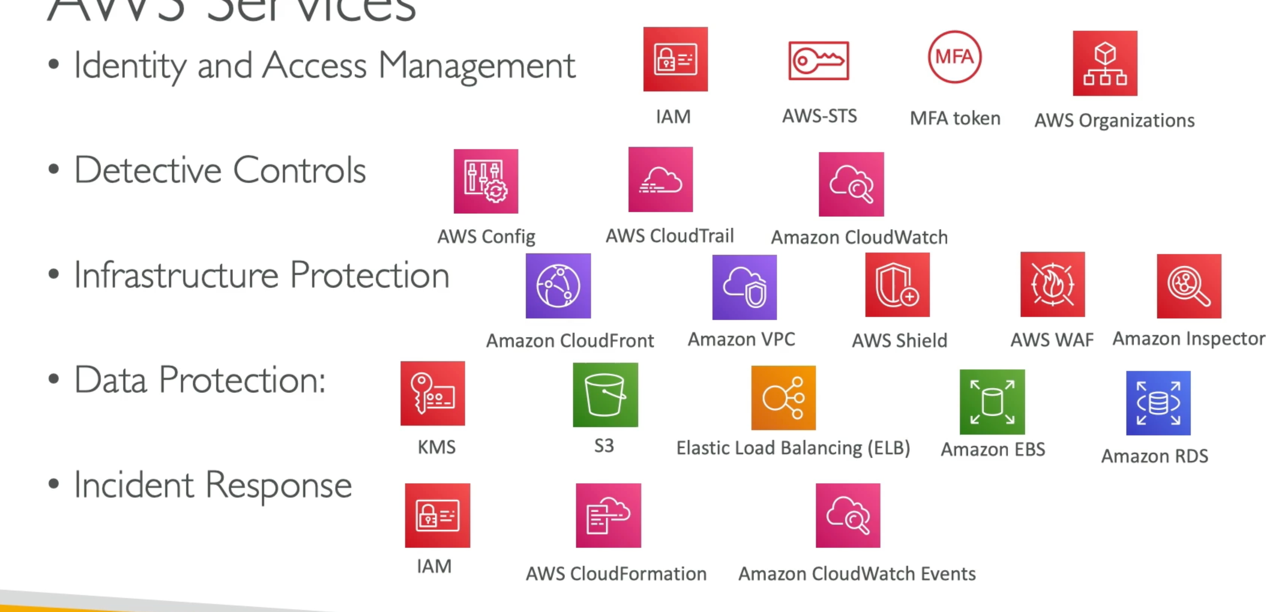
Security
Includes the ability to protect information, systems, and assets while delivering business value through risk assessments and mitigation strategies
Design Principles
Implement a strong identity toundation - Centralize privilege management and reduce (or ever eliminate) reliance on long-term credentials - Principle of least privilege - IAM
Enable traceability - Integrate logs and metrics with systems to automatically respond and take action
Apply security at all layers - Like edge network, VPC, subnet, load balancer, every instance operating system, and applicatior
Automate security best practices
Protect data in transit and at rest - Encryption, tokenization, and access control
Keep people away from data - Reduce or eliminate the need for direct access or manual processing of data
Prepare for security events - Run incident response simulations and use tools with automation to increase your speed for detection, investigation, and recovery
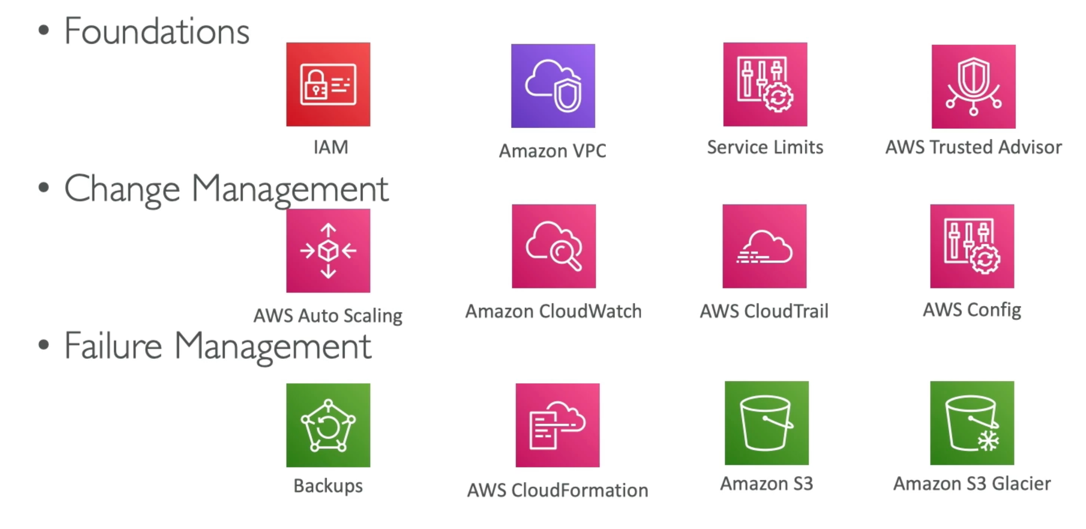
Reliability
Ability of a system to recover from infrastructure or service disruptions, dynamically acquire computing resources to meet demand , and mitigate disruptions such as misconfigurations or transient network issues
Design Principles
Test recovery procedures - Use automation to simulate different failures or to recreate scenarios that led to failures before
Automatically recover from failure - Anticipate and remediate failures before they occur
Scale horizontally to increase aggregate system availability - Distribute requests across multiple, smaller resources to ensure that they don't share a common point of failure
Stop guessing capacity - Maintain the optimal level to satisfy demand without over or under provisioning - Use Auto Scaling
Manage change in automation - Use automation to make changes to infrastructure
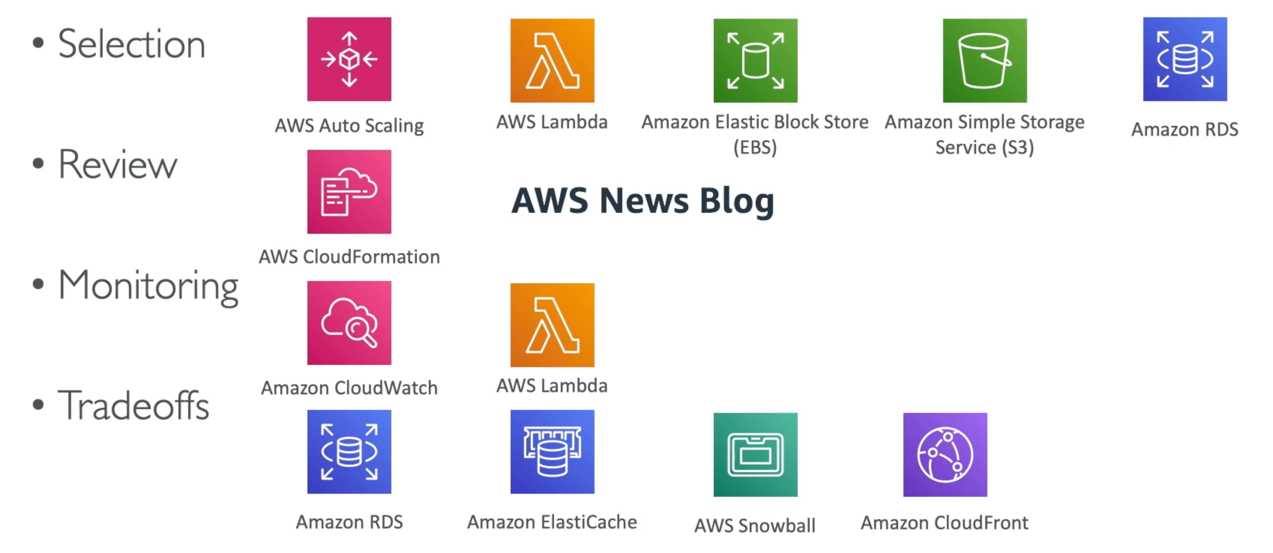
Performance Efficiency
Includes the ability to use computing resources efficiently to meet system requirements, and to maintain that efficiency as demand changes and technologies evolve
Design Principles
Democratize advanced technologies - Advance technologies become services and hence you can focus more on product development
Go global in minutes - Easy deployment in multiple regions
Use serverless architectures - Avoid burden of managing servers
Experiment more often - Easy to carry out comparative testing
Mechanical sympathy - Be aware of all AWS services
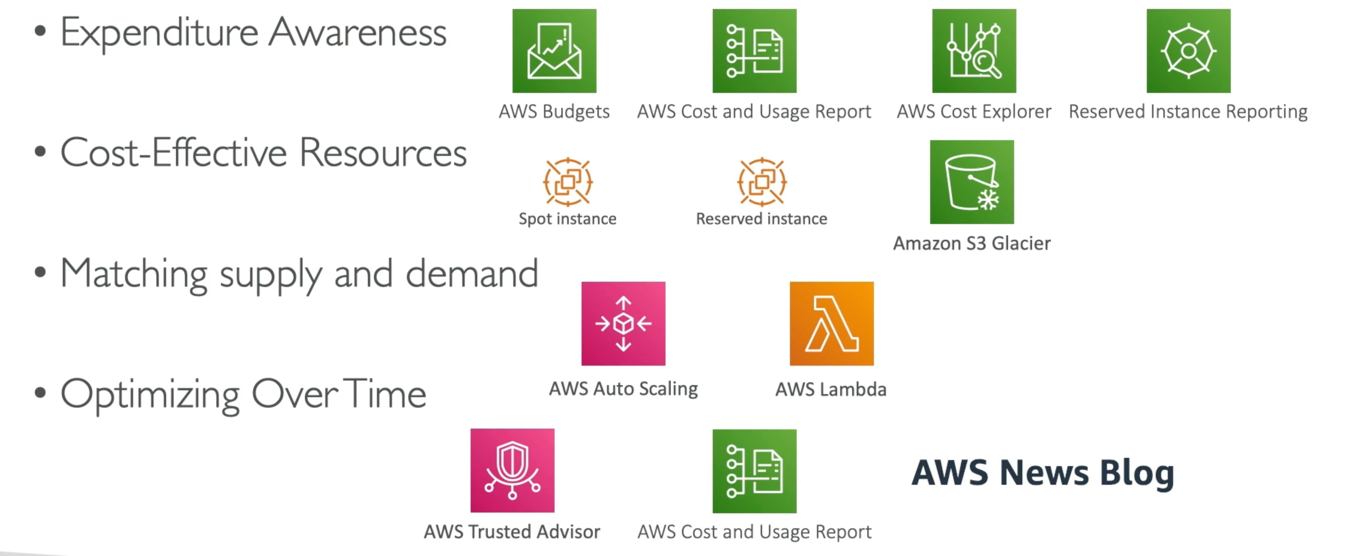
Cost Optimization
Includes the ability to run systems to deliver business value at the lowest price point
Design Principles
Adopt a consumption mode - Pay only for what you use
Measure overall efficiency - Use Cloud Watch
Stop spending money on data center operations - AWS does the infrastructure part and enables customer to focus on organization projects
Analyze and attribute expenditure - Accurate identification of system usage and costs, helps measure return on investment (ROl) - Make sure to use tags
Use managed and application level services to reduce cost of ownership - As managed services operate at cloud scale, they can offer a lower cost per transaction or service
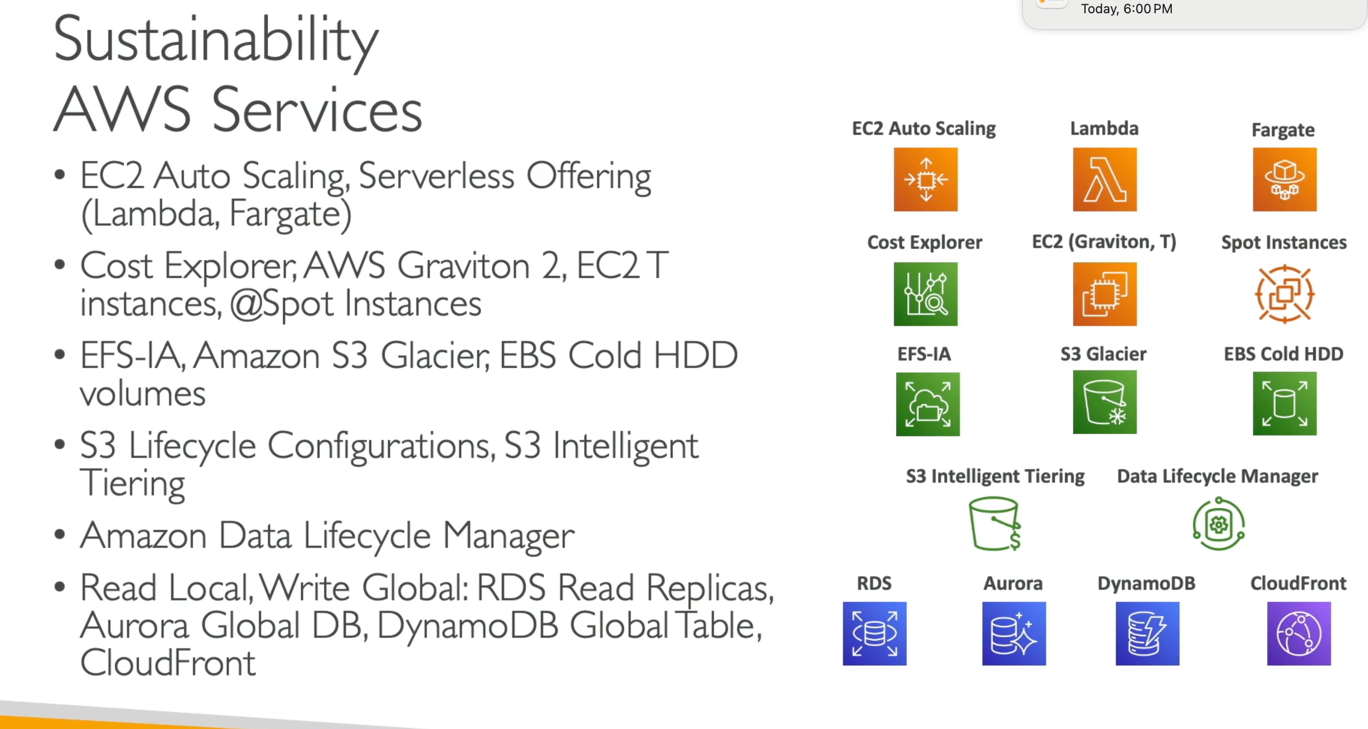
Sustainability
The sustainability pillar focuses on minimizing the environmental impacts of running cloud workloads.
Design Principles
Understand your impact - establish performance indicators, evaluate improvements
Establish sustainability goals - Set long-term goals for each workload, model return on investment (ROI)
Maximize utilization - Right size each workload to maximize the energy efficiency of the underlying hardware and minimize idle resources.
Anticipate and adopt new and more efficient hardware and software offerings - and design to flexibly adopt new technologies over time
Use managed services - Shared services reduce the amount of infrastructure; Managed services o automate sustainability best practices as moving infrequent accessed data to cold storage
and adjusting compute capacity
Reduce the downstream impact of your cloud workloads - Reduce the amount of energy or resources required to use your services and reduce the need for your customers to upgrade their devices
They are not something to balance, or trade-offs, they're a synergy